This product has been added to your inquiry list - View Inquiry List
Description
Request a quote
FAQ
Description
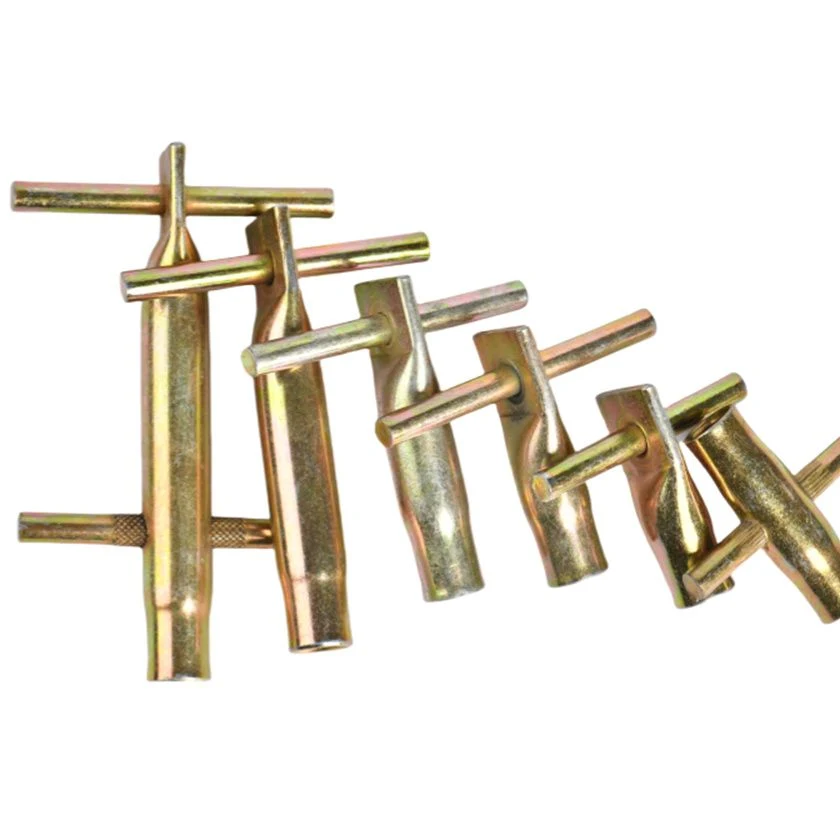
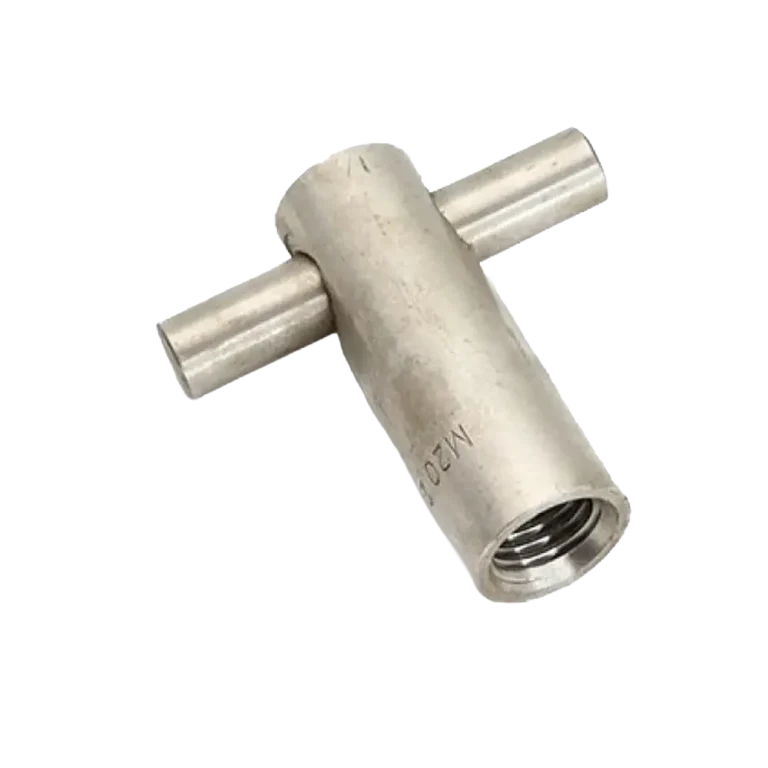
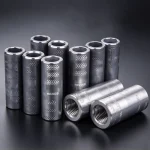
Fixing inserts provide a permanent, corrosion-protected internal thread in precast concrete for later connection of curtain-wall brackets, support angles, equipment bases and temporary works. The cross pin anchors the insert in the concrete and resists pull-out and rotation during tightening.
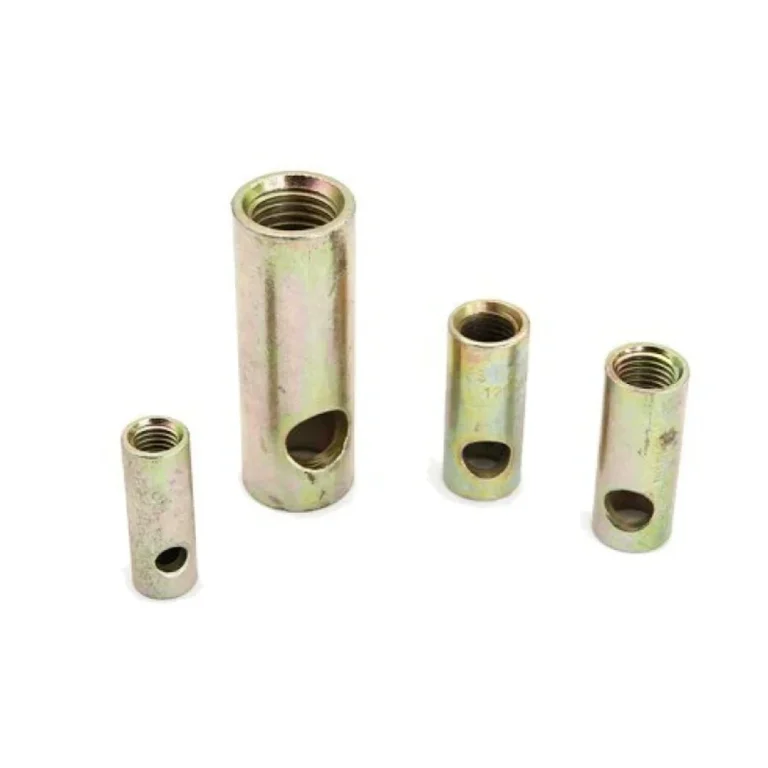
The insert is machined from 45# steel or 304 stainless steel, with a welded or swaged cross pin. A plastic cap protects the thread during pouring; the flat collar seats against the formwork and keeps the insert perpendicular to the concrete surface.
Product Parameters
Model
Thread (M)
Sleeve OD (mm)
Length L (mm)
Cross pin Ø (mm)
Recommended tension* (kN)
Tightening torque (N·m)
FIC-M10
M10
22
60
8
12
20
FIC-M12
M12
26
70
10
18
35
FIC-M16
M16
32
85
12
30
70
FIC-M20
M20
38
100
14
45
120
FIC-M24
M24
45
120
16
60
180
* Recommended working tension for C25/30 concrete with standard embedment and no edge effect; confirm by pull-out test for the project.
Key Features
Cross pin prevents the insert from spinning when the bolt is tightened.
Cross pin engages a larger concrete volume than a plain sleeve for higher pull-out resistance.
Plastic cap keeps grout out of the thread during pouring.
Carbon steel for normal conditions; stainless for façades and wet areas.
Custom lengths from 70 to 200 mm on request.
Applications
Curtain-wall and façade brackets
Precast column and beam connections
Equipment bases and machine anchoring
Balcony and stair balustrade fixing
Temporary works and lifting points (with load verification)
Installation & Quality Control
Nail or screw the collar to the formwork; keep the insert perpendicular to the surface.
Tie the cross pin to the reinforcement where required.
Keep the cap on during pouring; remove it only before connection.
Use isolation washers when stainless inserts contact carbon steel.
Torque values are for dry threads; reduce by 20% for lubricated threads.
FAQ
Q: What is the difference between a fixing insert and a lifting socket? A: A fixing insert is designed for permanent connections and is selected by pull-out capacity; a lifting socket is designed for repeated lifting with a defined SWL.
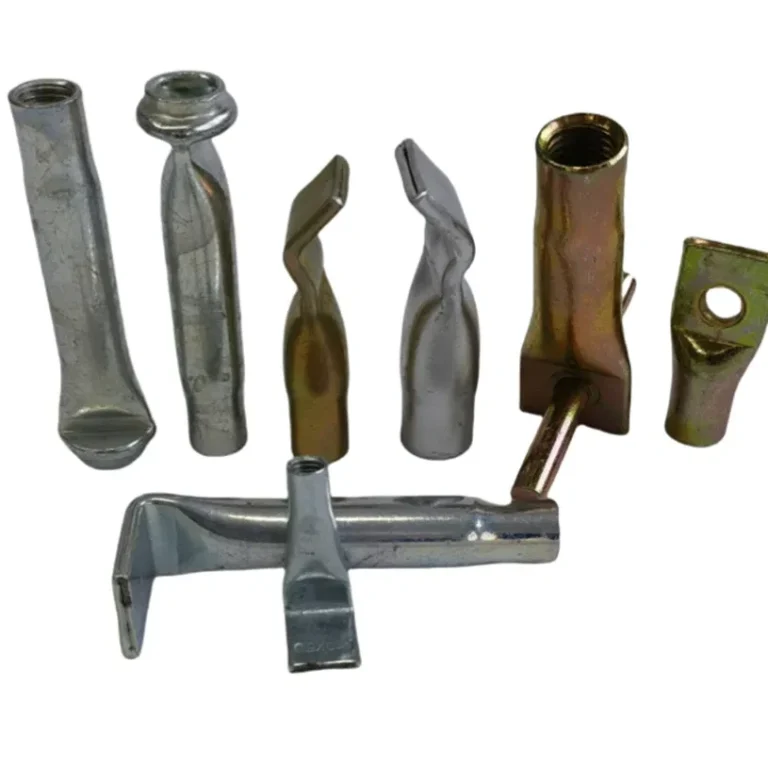
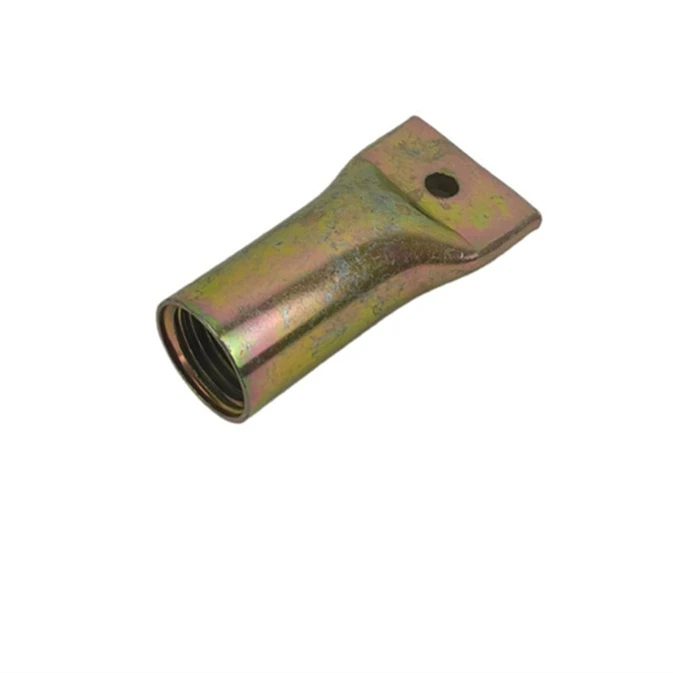
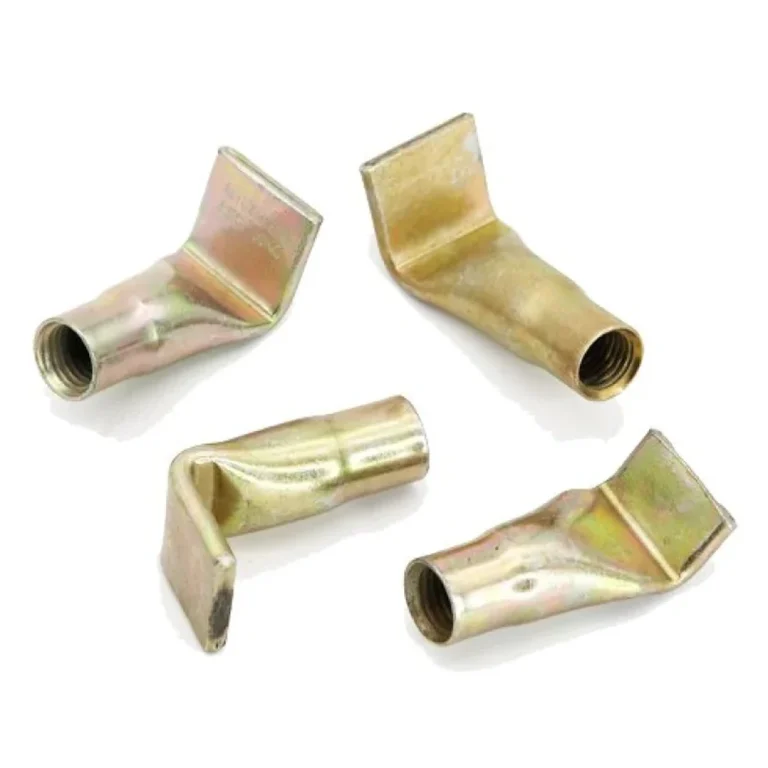
Q: Can I use it in a 100 mm thin panel? A: Only with an engineer’s check for edge distance and splitting. For thin panels, use a shorter insert or an S-shaped socket.
Q: Do you provide test reports? A: Yes, pull-out test reports can be provided per batch or per project; specify the concrete grade and embedment depth when ordering.